



Electric cars generally have fewer moving parts than petrol and diesel vehicles, but that does not mean they are maintenance-free. EVs still require regular inspections to keep the battery, tyres, brakes, cooling system, suspension, and electrical components working properly.
For drivers in Dubai, understanding how often an electric car needs servicing is especially important because high temperatures, heavy traffic, and frequent air-conditioning use can place additional demands on certain vehicle systems.
The exact service interval depends on the electric vehicle’s make, model, age, mileage, and manufacturer’s recommendations.
There is no single service interval for every EV.
Many manufacturers recommend an inspection based on time, mileage, or both. Some electric vehicles may require a scheduled inspection around every 12 months, while others use longer intervals.
The best approach is to follow the maintenance schedule provided for your specific vehicle.
Even when an EV does not need a traditional engine oil change, regular inspections remain important.
Electric vehicle servicing is different from conventional car servicing because there is no petrol engine or engine oil to maintain.
A professional EV inspection can include:
The exact inspection points depend on the vehicle manufacturer.
The battery is one of the most important and expensive components of an EV.
A battery inspection may check for diagnostic faults, abnormal performance, charging-related problems, and other signs that require attention.
Drivers should also pay attention to changes such as significantly reduced driving range, unusual charging behaviour, or battery-related warning messages.
Battery servicing should only be carried out by appropriately trained technicians because EV high-voltage systems require specific safety procedures.
Electric vehicles still produce heat and use cooling systems to maintain suitable operating temperatures.
Depending on the vehicle, the cooling system may help regulate the battery, electric motor, inverter, or other components.
Coolant levels, leaks, hoses, and related components may need inspection according to the manufacturer’s service schedule.
This is particularly relevant in hot climates where thermal management plays an important role in vehicle operation.
Electric cars can be heavier than comparable petrol vehicles because of their battery packs. Instant electric motor torque can also affect tyre wear.
Check your tyres for:
Correct tyre pressure is important for safety, handling, tyre life, and driving range.
Yes.
Electric vehicles use regenerative braking to recover energy, which can reduce how frequently the conventional friction brakes are used.
However, EVs still have brake pads, discs, calipers, and brake fluid that require inspection.
Less frequent brake use does not mean the braking system should be ignored. Components should still be checked according to the vehicle’s maintenance requirements.
The additional weight of an EV can place demands on suspension and steering components.
During routine servicing, technicians can inspect components such as:
Uneven tyre wear, unusual noises, steering vibration, or changes in handling can indicate that an inspection is needed.
Charging problems can have several possible causes.
A vehicle may experience charging issues because of the charging cable, charging port, electrical system, onboard charger, software, or external charging equipment.
If your EV suddenly takes much longer to charge or repeatedly stops charging, it is worth having the vehicle inspected rather than assuming the battery itself is faulty.
Air conditioning is an important part of everyday driving in Dubai.
EV climate-control systems can also affect energy consumption and driving range. A poorly performing AC system may make the vehicle less comfortable and can potentially use more energy than necessary.
Regular inspection of the AC system and cabin filter can help maintain proper cooling performance.
A fully electric vehicle does not use traditional engine oil because it does not have a conventional internal-combustion engine.
This is one of the major differences between EV and petrol or diesel vehicle maintenance.
However, EVs can still have other fluids and lubricants that require inspection or replacement according to the manufacturer’s recommendations.
Always follow the service requirements for your specific EV.
Dubai’s high temperatures make regular vehicle inspections particularly important.
Heat can affect various vehicle systems, and EV battery thermal management is especially important for maintaining suitable operating temperatures.
Drivers should not wait for a warning light or major performance change before arranging scheduled servicing.
Preventive inspections can help identify developing issues earlier.
You should consider having your EV checked if you notice:
A diagnostic inspection can help determine whether the issue is related to the battery, charging system, electrical components, cooling system, or another part of the vehicle.
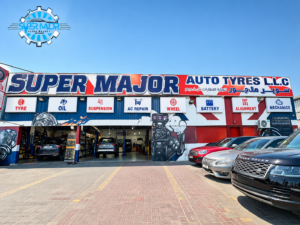
If you are searching for electric car servicing in Al Quoz 4, Dubai, choose a workshop that understands the specific maintenance requirements of modern vehicles.
Super Major Auto Tyres L.L.C. provides vehicle inspection, diagnostics, tyre services, wheel alignment, wheel balancing, brake services, and general automotive services.
For EV owners, the appropriate inspection should always be based on the vehicle’s manufacturer requirements and the technician’s ability to safely work with the vehicle’s systems.
A few simple habits can help you stay on top of EV maintenance:
Electric cars require less routine maintenance than many petrol or diesel vehicles, but they still need regular servicing.
Battery condition, charging systems, cooling systems, tyres, brakes, suspension, steering, air conditioning, and electrical components should all be monitored according to the vehicle manufacturer’s recommendations.
For EV drivers in Dubai, following a proper maintenance schedule can help maintain safety, reliability, and everyday driving performance.
If your electric car is showing a warning, experiencing charging problems, losing range unexpectedly, or behaving differently, professional inspection is a sensible next step.
The interval varies by manufacturer and model. Some EVs require annual inspections, while others use different time or mileage schedules. Always check your vehicle’s recommended maintenance schedule.
Fully electric vehicles do not require conventional engine oil changes because they do not have an internal-combustion engine.
Yes. EVs still have conventional braking components that require inspection, even though regenerative braking can reduce friction-brake use.
Yes. Battery thermal management and overall battery condition are important in hot climates. Follow the manufacturer’s recommendations and investigate unusual range or charging changes.
EV systems can involve high-voltage components, so technicians need appropriate training and safety procedures. The workshop should have the necessary expertise and equipment for the specific vehicle.